
Scales - Random Music Production Tables
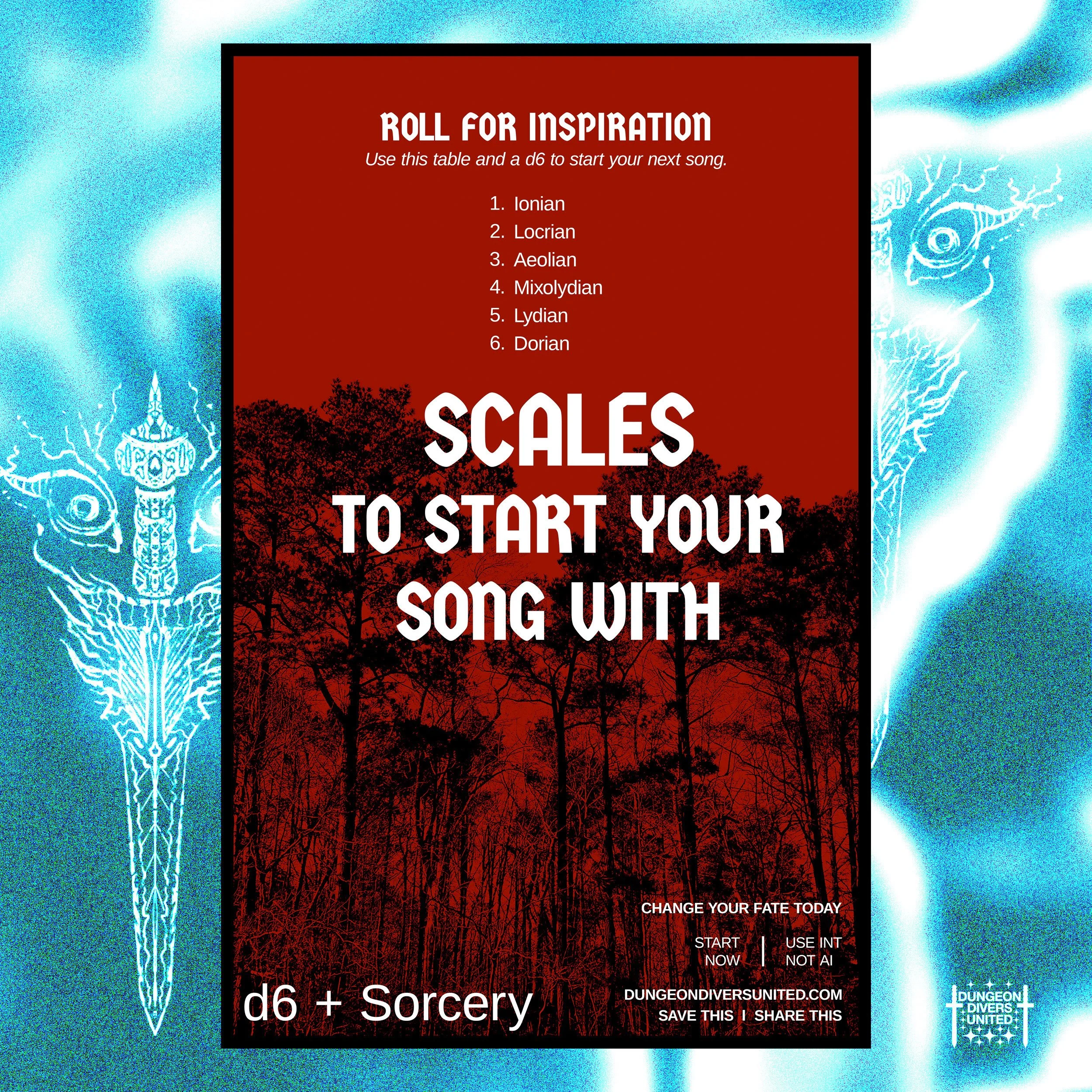
Break out your d6 or use the d6 button at the end of the post, it’s time to start that song up.
(Some) Modes! | Feelings & Uses
If you don’t have these modes memorized, don’t worry, it’s not a problem. Without getting into too much detail, here’s a brief description of each.
Ionian - Major. Joyful, powerful, bright.
Locrian - Tense, unstable.
Aeolian - Minor. Melancholic, romantic.
Mixolydian - This can be uplifting and cheerful, and can also feel serious.
Lydian - Dreamy, floating.
Dorian - Sad, sophisticated, unsure.
Well, that’s some of them. The six aforementioned music scales were picked so that a d6 could be rolled to choose one. In the future it might be cool to add in different dice. The Phrygian mode, with it’s dark and passionate ways, has been omitted here for no special reason. Feel free to swap out one of the modes on the table with Phrygian if you’d like (and might I suggest swapping out Locrian if you are going to do a swap.)
This table of scales may not be the most exciting topic, the most painful decision made when composing, or even complete. What can be said is that if used wisely, it can save valuable brainpower for the writing stage of song production.

Choosing a mode before you start writing music helps set up atmosphere and emotion. You can make your dungeon’s atmospheric battle track as emotionally dark and dusty as the dungeon itself.
Sometimes setting up structure before putting down any notes is great. You’ll have less options to mull over and this can help speed up your creative output. I work in Logic Pro, and sometimes I’ll set up “loose” targets, like BPM, song length, and structure (as in the parts A > B > A > C). I love locking into a scale as well. It reduces friction and let’s me enter a flow state more quickly than when I’m writing a melody or riff and then finding the scale from there.
Selecting a system works well, whether recording live or writing MIDI notes into your DAW of choice. I love setting a scale in Logic Pro, then using the paint brush tool to write notes into the piano roll for two reasons. Logic will lock the notes you paint into the scale and mode you set, and if you have notes in your song outside of your chosen scale, you can quantize them into the correct scale (having that sound great is a different subject altogether, so go with your ears and your gut on that.
In my experience, picking a scale before writing any music is like loading myself into a trebuchet, and getting hurled over the enemy wall and right into the evil king’s throne room, where I can get straight to the task at hand. (Writing a drone song is the current assignment at the time of writing this article.)
In choosing one of these modes, you can convey the emotions and atmosphere you want your music to deliver to the listener. It’s powerful stuff. These are just rules though, and once you learn them feel free to toss them out of the window and do your own thing.
If you want to dive into modes more deeply, here’s a link to Wikipedia’s page on modes.
Have fun out there and do something creative just for yourself today, alright?
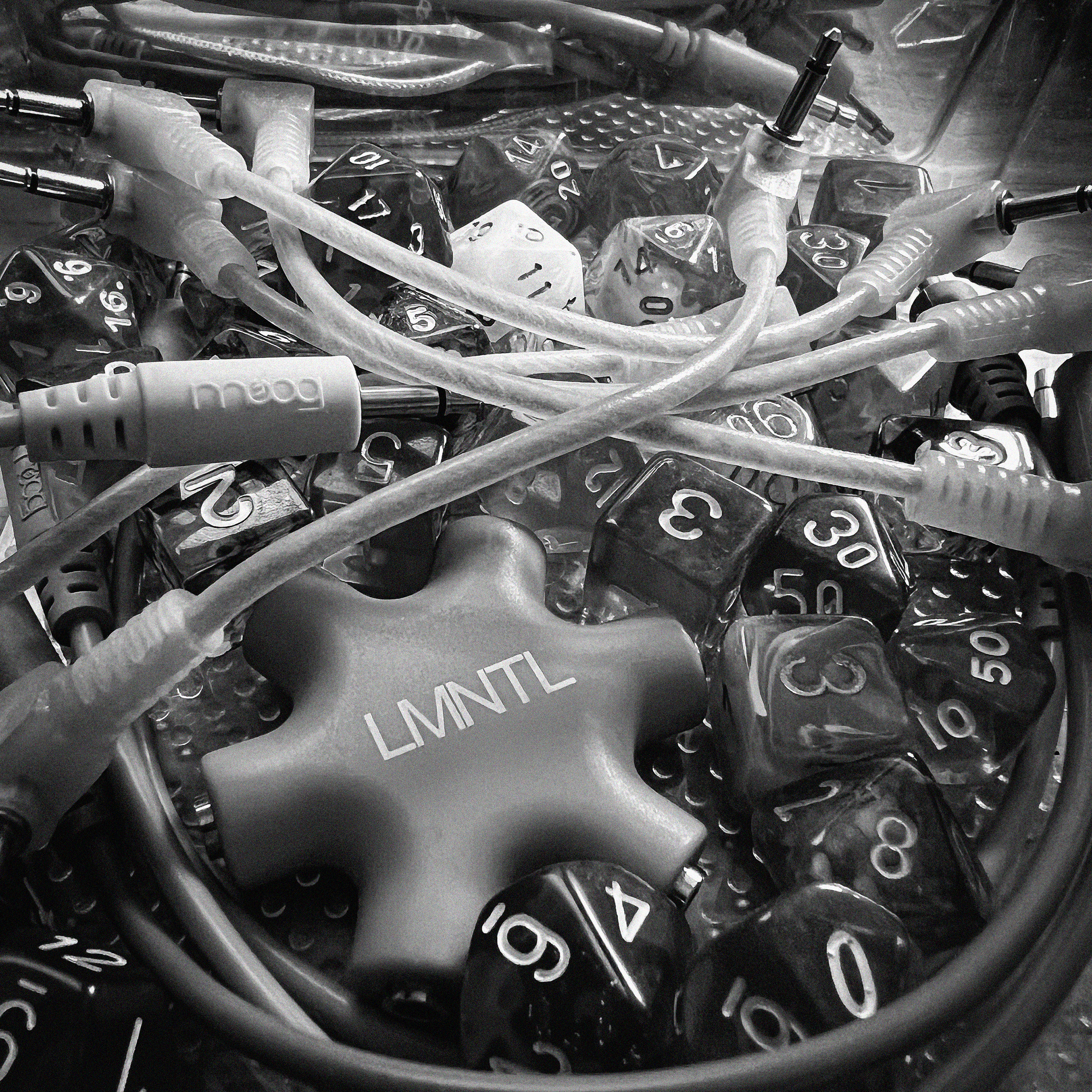
The dice go with the modular synth patch cables here in the dungeon.
*Note - The original art for these tables were made with Adobe Express. This post’s artwork has a photo of trees taken by me at a nearby state park. The original photo (of some cathedral) was replaced because I couldn’t verify that it wasn’t AI.